UPDATE 6/12/18
John Lindley was kind enough to share his versions which you can find here and cover the GCSE RPs. I’ve also written an article about running practicals which you may find useful here.
UPDATE 5/6/18
I now have a bunch of new sheets for our new HSW unit which I’ll be releasing soon. There are a few different styles in there too which gives you a bit of choice.
UPDATE 26/2/18
I have written a new prac sheet for crystallisation for KS3, but it’s a required prac at KS4 so could be useful there too. All pracs available at link

UPDATE 14/11/2017
I have written a new practical instruction sheet for the thermal decomposition of copper carbonate for my year 7s (hence imprecision in method). When I made it I was surprised at just how many steps it broke down into – but I suppose that’s the whole point. Let me know any feedback. I haven’t used it yet so would be good to have some thoughts.
Decomposition prac ws visual (1)
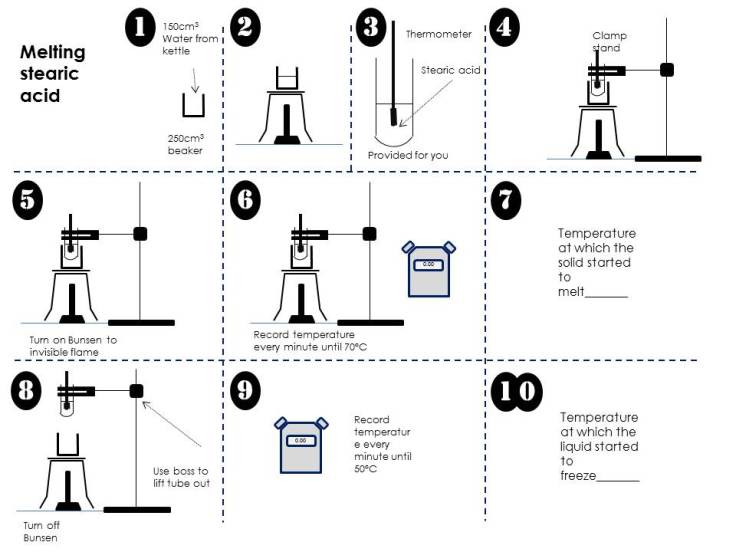
I have written extensively about cognitive load in science practicals generally. In short, the sheer number of things going on during a practical massively hinder any learning; however “minds on” you try and train your students to be.
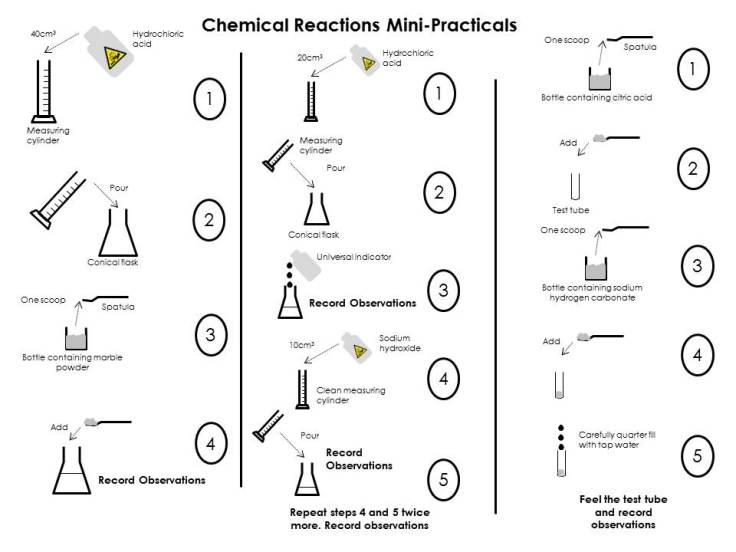
Inspired by Bob Worley and David Paterson I have tried my hand at mixing up one of our practical sheets to make it a bit more cognitive-load-friendly.
Place in learning sequence:
Students know about atoms/elements/compounds –>
students to be told about chemical reactions and a number of ways to tell they have occurred –>
copper turnings + nitric acid demonstration and discussion –>
Introduce practical –>
Students attempt practical using sheet.
Would appreciate any thoughts/feedback. Soft copy below.


December 11, 2017 at 10:15 pm
Love the idea! And totally agree about the cognitive load. I found this problematic all the way up to 1st year of my degree. Often had to rewrite myself my own set of instructions. Some suggestions:
Check this out to make the creation process easier: http://www.somersault1824.com/science-illustrations/
I would have the quantities right next to the substance, so in the first step, put the 40cm3 by the hydrochloric acid.
Traditionally step numbers would be on the left, not the right …
Middle column appears crowded, the left and right ones are much more visually pleasing.
I think you could make better use of left and right to communicate what to add to what, e.g. always have the reaction vessel on the left and the supplies (acid, bottles of powder) on the right. This might help indicate when they need to go and fetch something from the front bench/cupboard etc. Not sure whether this is helpful as I don’t know how your labs are set up.
Not sure what program you’ve used, but if I did this, I would use Pages (Mac). It’s great at creating simple visuals effectively.
LikeLike
December 11, 2017 at 10:16 pm
Good stuff J thanks!
LikeLike